
Short answer
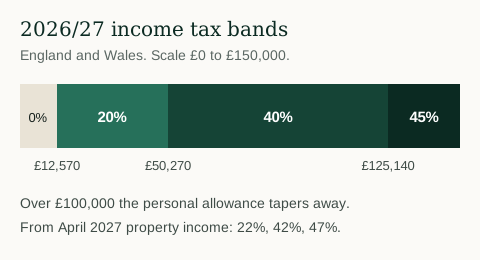
Landlords who own property personally pay income tax on rental profit at the same 20%, 40% or 45% rates as their salary or pension in 2026/27 (England and Wales). Mortgage interest earns a 20% tax reduction instead of a deduction. You report on a Self Assessment return or through Making Tax Digital.
Figures checked against GOV.UK and HMRC guidance.
Who pays landlord tax on rental income?
Anyone who receives rent from UK property, including from a room, an inherited home or a former home. The first £1,000 of property income each year is covered by the property allowance. GOV.UK
Full guide: how rental income is taxed
How is rental profit worked out?
Rent due for the tax year, less allowable revenue costs such as letting fees, repairs, insurance and accountancy. Capital spending such as an extension is not deductible against rent, but may reduce your gain when you sell.
Full guide: landlord allowable expenses
Can landlords deduct mortgage interest?
Not if you own the property personally. You get a tax reduction of 20% of the interest instead, which costs higher-rate taxpayers relief; companies are not affected.
To see what it costs you, use the rental income tax calculator.
What happens if my rental business makes a loss?
It is set against your other UK lets in the same year, and anything left is carried forward against future rental profits. It generally cannot reduce your salary or other income, and is usually lost if the rental business ends. HMRC
When and how do landlords report to HMRC?
Most file a Self Assessment return by 31 January after the tax year ends, registering by 5 October if they are new. Landlords in Making Tax Digital send quarterly updates instead, then a final declaration. GOV.UK
Making Tax Digital for landlords
What tax do I pay when I sell?
Capital Gains Tax at 18% on gains falling within the basic rate band and 24% above it, after an annual exempt amount of £3,000. UK residents report and pay within 60 days of completion when tax is due. GOV.UK
Capital Gains Tax when selling a rental property
Should I own property through a company?
It suits some landlords and not others. A company deducts interest in full and pays Corporation Tax, but taking profits out is taxed again and moving existing property in is usually treated as a sale.
Property portfolio tax planning
Already own through a company? See our property SPV accountant service.
What landlord tax changes are coming?
- From 6 April 2027: property income in England and Wales will be taxed at 22% (property basic rate), 42% (property higher rate) and 47% (property additional rate), and the finance cost reduction rises to 22%. HM Treasury technical note
- From 6 April 2027: Making Tax Digital extends to qualifying income over £30,000, and over £20,000 from April 2028.
- Furnished holiday lets: the special regime ended from 6 April 2025 (1 April 2025 for companies). Former holiday lets are now taxed like other lettings. GOV.UK
This guide covers landlords who pay tax in England and Wales. The UK Government has said it will discuss with the Welsh Government whether Wales can set its own property rates in future. Scottish taxpayers pay different rates and are not covered here.
The bottom line
For most individual landlords, landlord tax comes down to three things: rental profit taxed at your own rates, mortgage interest relieved at 20% rather than deducted, and a return or quarterly updates on time.
The rules that catch people out are the interest restriction, the line between repairs and improvements, and the deadlines. Two changes in April 2027, to property tax rates and the Making Tax Digital threshold, make it worth reviewing your position before then.
Put every date for the year in your diary with the free landlord tax checklist.
Related questions
Do I need to tell HMRC about rental income under £1,000?
No. The £1,000 property allowance covers it, so there is nothing to report. Once gross rent goes past that figure, the guide to how rental income is taxed explains whether a phone call or a full return is needed. GOV.UK
Can I set a rental loss against my salary?
Generally not. Rental losses are carried forward against future profits of the same rental business. HMRC
When do I need to register for Self Assessment?
By 5 October after the end of the first tax year in which you need to file. GOV.UK
Official sources
- Renting out a property: paying tax GOV.UK
- Work out your rental income when you let property HMRC
- Income Tax rates and Personal Allowances GOV.UK
- Restricting finance cost relief for individual landlords: how it's worked out, including case studies HMRC
- Register for Self Assessment GOV.UK
- Self Assessment tax returns: deadlines GOV.UK
- Find out if and when you need to use Making Tax Digital for Income Tax GOV.UK
- Capital Gains Tax rates GOV.UK
- Change to tax rates for property, savings and dividend income: technical note (26 November 2025) HM Treasury / HMRC
- Furnished holiday lettings tax regime abolition GOV.UK
Figures were checked against these sources on . Tax rules change: check the source or ask us before acting.
Please note: this guide is general information on UK tax rules at the review date shown. It is not advice for your situation. Rules change and the right answer depends on your circumstances, so check the sources or speak to us before acting.